#1Speed turns into reach. People did not turn faster transport into saved time, but into reach: they still travel about an hour a day, just farther (Marchetti’s constant). With AI, the constant is the programmer’s attention and time. Generation is fast, but not instant. Teams will not work less; they will reach further and build larger, more complex systems [1].
#2Aging will speed up. Software does not age on its own, but because the world around it moves. AI speeds up the surrounding world, so even old hand-written code ages faster, unless AI also makes its modernization cheaper [2].
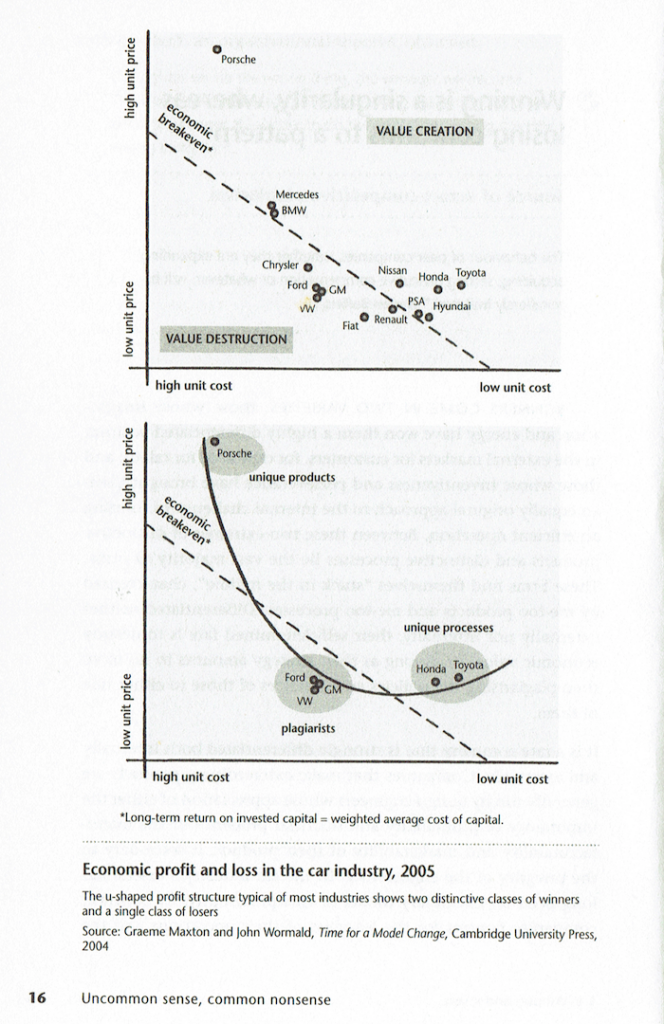
#3 The advantage leaves the code. AI is a factory of common practice and makes cheap everything that is public. The advantage lies in knowledge, experience and the way a team works, which cannot be copied because they are the result of years of evolution. When everyone can cook, the chef’s taste and intuition decide: what to make and what to leave out [3].
#4 What cannot be sped up grows in value. The scarcest things are those that can be sped up only a little: understanding and verifying code, but also earning trust, building a brand and a user base [4].
What grows slowly matures slowly, but also ages more slowly [5].
- Marchetti, C. (1994). Anthropological invariants in travel behavior. Technological Forecasting and Social Change 47(1), 75–88.
- Parnas, D. L. (1994). Software Aging. ICSE 1994.
- Goddard, J., Eccles, T. (2013). Uncommon Sense, Common Nonsense. Profile Books.
- Baumol, W. J. (1967). Macroeconomics of unbalanced growth: the anatomy of urban crisis. American Economic Review 57, 415–426.
- Šmalgauzen (Schmalhausen), I. I. (1926). Problema smerti i bessmertija (Проблема смерти и бессмертия). Moskva–Leningrad: Gosizdat.